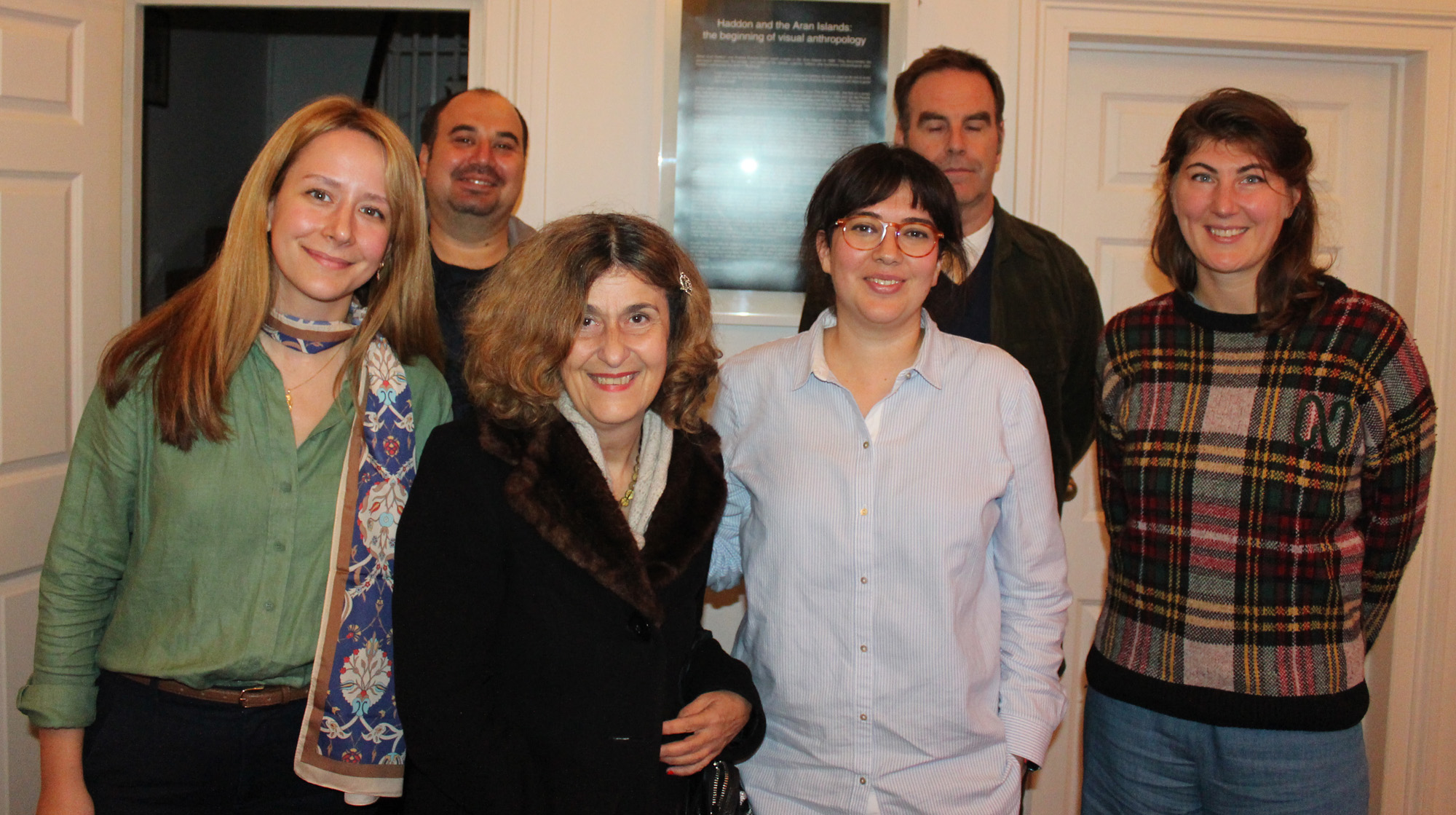
Dr Nil Palabıyık hybrid presentation: ‘A Lost Greek Renaissance: Nicodemus Metaxas and the first Greek printing press in Constantinople (1627–28)’, 24 October 2023 - flyer:
1- Amongst the works you have examined in your studies is Jacobus Golius’s oriental dictionary (pub 1613), heavily derived from early Arabic-Persian-Turkish dictionaries compiled by Ottoman lexicographers. How important was this man’s collection driven by stays in the Eastern Mediterranean and the works published from those sources by him? Was Leiden where Golius was based a chief centre for learning for Arabic texts at the time?
The University of Leiden emerged as an intellectual powerhouse in the early seventeenth century, playing a pivotal role in the young and ambitious Dutch Republic. A significant aspect of its influence was its commitment to introducing Ottoman knowledge to Protestant Europe through a dual approach: attracting expertise and acquiring resources. The university drew in and nurtured scholars skilled in oriental languages, including notable figures like Joseph Scaliger (1540–1609), Thomas Erpenius (1584–1624), and Jacobus Golius (1596–1667). These professors amassed collections of Arabic, Persian, and Turkish manuscripts for both their private libraries and the University Library. Between 1626 and 1629, Golius spent considerable time in Aleppo and Constantinople, where he enhanced his linguistic skills, purchased books, and established vital connections with Ottoman scholars, scribes, and book dealers. The manuscripts Golius brought back from the East—along with those he continued to acquire after returning to Europe—significantly influenced the early development of oriental studies. He and his students, such as Anton Deusing, engaged in in-depth and comparative analyses of the texts contained in these volumes.
2- Amongst these early scholars of ‘Eastern languages’, was Venice with its tolerance and existing foreign merchant communities present, including the Ottomans, a go-to place to learn languages and habits or was the teaching invariably done by European academics who had already learnt languages through their earlier residence in the Levant?
Natalie Rothman’s study, The Dragoman Renaissance (2021), reveals how the dynasties of Constantinople-born Venetian dragomans played a crucial and unique role in shaping oriental learning in Europe. Through their close ties with the Ottoman court and learned elites, as well as the linguistic depth and breadth of their upbringing and education, these individuals became what Rothman calls “cultural brokers”. These dragomans effectively mobilised Ottoman expertise through the production of philological knowledge. They translated Turkish literature into European languages and created works that explained the language, religious customs, and institutions of the Ottoman Empire. For centuries, Venice served as the closest neighbour, competitor, and trade partner of the Ottomans. The Venetian dragomanate, deeply rooted in the linguistic and cultural traditions of both sides, possessed intimate knowledge of Ottoman political and cultural institutions, along with the administrative languages of both states.
Venice was a hub for diplomacy, trade, oriental learning and printing during the sixteenth century. However, the Republic gradually lost its global cultural and diplomatic influence by the seventeenth century. Erpenius, a Leiden Arabist, famously never travelled East beyond Venice, yet learned Persian and Turkish from native speakers there. In contrast, the following generation of scholars, including Golius and Edward Pococke (1604–1691), who became the first Laudian Professor of Arabic at Oxford, chose to learn firsthand in the Ottoman Empire. My general observation is that those who stayed in the East for extended periods, such as Golius and Pococke, progressed significantly further in their language learning than those who relied solely on European instructors and printed materials written by European orientalists, with only a few exceptions.
3- For the Ottoman Turkish text accessed by these early European scholars, to what extent were they copies or adaptations of Arabic and other local languages and did any go back to their own ancestral legends or was the great bulk of writings of both cultures mostly Islamic religious texts?
To address this question, we first need to recognize that during the medieval and early modern periods, literary production placed a greater emphasis on tradition and ancient examples rather than on originality. This perspective applied to both the Ottomans and Europeans. Therefore, a Turkish narrative poem that adapted an earlier Persian work was regarded as equally respectable as an original contemporary piece.
My research indicates that many European orientalists approached original Turkish works, as well as translations, adaptations, and auxiliary materials like commentaries, with the same level of interest and rigor. Engaging in comparative readings of the same text across multiple languages—such as Hebrew, Arabic, Greek, Persian, and Turkish — was a common practice. This method allowed scholars to fill gaps in their understanding and to enhance their skills in one language by leveraging their knowledge of others. As a result, they often made emendations and corrections to their manuscripts or printed copies, which frequently contained defects.
This approach explains why we find copies of the same text in multiple languages in the book collections of orientalists, whether they be Polyglot Bibles, scientific texts or literary works such as fables and long narrative poems. Equally, some original Turkish texts were sought after by European orientalists in their own right even if there was no direct link to the broader Islamic tradition.
Turkish texts were utilised in the most unexpected ways. Let me give a few examples to illustrate my point. The Parisian physician Étienne Hubert (1567–1614) shared with his friend Scaliger that he was reading an Arabic translation of the Hebrew Pentateuch, using an Arabic-Turkish dictionary for assistance. Golius, on the other hand, read Bidpai’s animal fables, which were originally written in Sanskrit but became known in the Islamic world through Arabic translations entitled Kalila and Dimna, in two different Turkish versions: a fourteenth-century Old Anatolian Turkish prose translation and a very elaborate sixteenth-century verse adaptation.
The appeal of the old Turkish Kalila and Dimna for Golius lay in the relative antiquity of the language and its clear, concise and authentic character – qualities that made the text an excellent resource for studying the language. This ‘pure’ Turkish lacked the numerous Persian and Arabic influences in vocabulary and grammatical structures that became characteristic of the literary language in later centuries under the Ottomans.
Golius’ study of the Old Turkish Kalila and Dimna extended beyond mere comparative philology. He approached the Turkish text with cultural and literary interest, annotating it with great care. The text included numerous idioms, sayings, and proverbs. To enhance his understanding, he even commissioned his language assistant to create a Persian back translation. When it came to selecting original Turkish texts, the choices were often influenced by the practical needs or personal interests of European readers. For instance, the Leiden printer Justus Raphelengius (1573–1628) read and annotated Nasreddin Hoca’s humorous folk tales with the intent of publishing them. Golius reviewed a horticultural manual to support his work at the botanical gardens of Leiden University, while the theologian Pococke focused on Sufi legends and the lives of saints.
The book collections assembled by European orientalists were diverse and rich in content.
4- Nicodemus Metaxas clearly got his introduction to printing and publishing in London where spent from 1623 4 years. Do you think he was there to fill a need as might have been expressed and possibly directed by his teacher from 1615, one of the leading Greek philosophers of the time, Theophilos Corydalleus. This Eastern Orthodox cleric developed a new philosophical interpretation that attempted to liberate Aristotelian thought from ecclesiastical control and apologetic objectives. This interpretation was somewhat dangerous because it was suspicious to Church authorities. Was Corydalleus, therefore, successful in getting this radical vision of Orthodox Christianity to be accepted as he became the director of the Patriarchal academy in Constantinople?
Metaxas’s reformist worldview and his education under Corydaleus in Ottoman Athens heavily influenced the contents of his printed output. The tracts Metaxas produced in London and circulated across Western Europe, the Balkans, the Mediterranean and Russia put forward the theological opinions of a diverse set of Greek authors, sometimes featuring opposing views in the same volume, such as those of Gregory Palamas (1296–1359) and Barlaam of Calabria (1290–1348). Undoubtedly inspired by the polemic-driven pamphlet wars of Reformation Europe, Metaxas’s publications intended to foster more debate and ultimately reform the Greek Orthodox Church —an objective that Patriarch Cyril Lucaris pursued but did not achieve. Lucaris’s efforts led to the reform of the Patriarchal Academy under Corydaleus’s directorship between 1625 and 1640, as well as the first modern Greek translation of the New Testament by Maximos of Gallipoli in 1629. The treatises printed in London and Constantinople by Metaxas were used as textbooks at the Patriarchal Academy and in Greek schools elsewhere.
It is unlikely that Metaxas was ‘sent’ to London in 1623, as he was not particularly young and was independently wealthy by that time. Although he considered attending Oxford or Cambridge for further studies, he quickly decided to settle in London. Given the substantial demand for Greek copyists, editors, and correctors in the city’s printing trade, he would have easily found work on Fleet Street. However, Metaxas focused on building strong relationships with book producers. Eventually, he left London for Constantinople on an English ship, taking with him crates of books, a press, and printing materials, which were likely gifted to him.
5- Was the move by Nicodemus Metaxas by ship to Constantinople again to fill a need, of printing of these epistolary / religious philosophical texts in that city for ease of transport and spread? Was the use of demotic Greek in these publications part of this Greek renaissance or was it so they could be more easily understood by those whose knowledge of classical Greek wasn’t perfect?
The Greek Church and the Greek Orthodox schools in the Eastern Mediterranean often lacked the qualified teaching staff and the necessary teaching materials. In the late sixteenth and early seventeenth century, this void began to be filled by the Catholic schools and printed demotic Greek publications sponsored by the missionary arm of the Roman Church, the Sacred Congregation for the Propagation of the Faith (Sacra Congregatio de Propaganda Fide).
The Greek Church needed Metaxas’s printed books to counter the proselytisation efforts of the Papal missionaries. The use of the demotic Greek language was both a necessity in order to reach the wider public and a political stance. Metaxas did write, in one of his prefaces, that he printed tracts rendered in the ‘common and vulgar language’ (κοινῇ καὶ χυδαίᾳ γλώττῃ) whenever possible so that all Greeks would be able to read these texts—or at least follow them when read aloud.
6- Constantinople at the time was truly multi-confessional with the Jesuit priests based in their schools such as St Benoit were presumably keeping a close eye on their flock and this new printing revolution by the Orthodox nation they presumably saw as a threat in their promotion of their creed? Did the Jesuits pursue an active propaganda campaign, such as their own printing in Greek or was it more passive in attracting new adherents from the different rayah Christian populations in the city through their schools and other secular services offered?
The teachers at the Catholic school at the St Benoit Church were French Jesuits, but they instructed the local children in their native languages. Younger pupils were taught to read and write in Greek and Italian, as well as maths and basic recitations such as the Lord’s Prayer and the Apostles’ Creed. In the later years, the curriculum spanned Latin and Greek grammar, rhetorics, logic, philosophy and sciences. Famed for the quality of its education, the school was a popular choice for Constantinopolitan families of different confessions and backgrounds. Among the pupils were Latins, Greeks and Armenians, even some Jews. As part of the Propaganda Fide network, the school had access to the books printed at the publishing house in Rome and boasted a well-stocked library. The school also offered extra-curricular activities, including an opportunity to perform in mystery plays, as we understand from the surviving dramatic texts from the period.
Theatrical performances reenacting the lives of early Christian martyrs or tragedies, often portraying ‘a sinner converted to Catholicism’ were acted in vernacular Greek and attracted large audiences. Reportedly, a play about the childhood of St John Chrysostom was staged in Constantinople on 13 November 1624, the very day the Orthodox celebrate the feast of the venerated saint. The French ambassador Phillip de Harlay’s eight‐year-old son, a pupil at the St Benoit Jesuit College, played the leading role and recited long and complex soliloquies in Greek. The fact that the resident consul of the Netherlands, the Venetian bailo and the ambassador of the Holy Roman Empire were all among the audience demonstrates how strongly religion and diplomacy were intertwined in Constantinople. Patriarch Lucaris requested to attend to take in the famed talent of the French boy, yet he and the English Ambassador Thomas Roe were not invited.
In 1610, two Greek monks and a deacon were attending lectures at the Jesuit College much to the displeasure of the Patriarch. When things got out of control, Lucaris resorted to an encyclical advising his flock to remove their children from Jesuit schools. Lucaris accused the French Jesuit fathers of luring the Greek children into their educational establishments and then proselytising them. The schools being inclusive and free of charge, such measures fell on deaf ears. ‘The Jesuits’, Cyril wrote in 1613 to a Dutch minister in The Hague, ‘taking the opportunity, have laid the foundation of a plan for educating boys in Constantinople, and they are succeeding in it like foxes among hens’.
Conversely, when Metaxas, an Orthodox monk, established the first Greek printing house in Galata in 1627, the Jesuit friars were alarmed and made a complaint to the Grand Vizier, alleging that Metaxas printed blasphemies against Prophet Muhammad and aimed to incite a rebellion among Ottoman Greeks.
7- During the period when Metaxas was active the Orthodox Patriarch in Constantinople Cyril Lucaris was clearly open to new ideas and was a serious collector of books and manuscripts. He presumably wished for Metaxas to publish many more books but Jesuit false accusations (the publication of ‘Brief discourse on Jews, in vernacular dialect’, which was redacted to remove any mentions of Moslems) on the contents of a publication meant the printing house of Metaxas only operated for a year. Do you think that from then onwards Patriarch Cyril was a ‘marked man’ as he clearly had developed powerful enemies for his Calvinist leanings and do you think Sultan Murat IV had him strangled in 1638 for the pretext of wishing to replace him with a ‘less troublesome’ Patriarch?
I find it unfortunate that the Greek press of Constantinople was so short-lived and produced so few publications because of the antagonisms between the Roman Catholic Church and the Eastern Church. What were the first seeds of a potential Greek Renaissance never blossomed and many more works that Metaxas intended to print in order to foster learning, toleration and religious plurality never saw the light of the day. Metaxas returned from England with a strong stance emphasising the merits of moderation and constructive criticism. As he disclosed in the preface to the volume printed in Constantinople, he did not set out with the purpose of adding fuel to these antagonisms, but ‘to encourage the good in civil life’ (νὰ αὐξάνονται τὰ καλὰ . . . εἰς τὴν ἀνθρωπίνην πολιτείαν) because ‘people want to be moved by the example of good deeds’ (οἱ πολλοὶ . . . θέλουν παρακινηθεῖ εἰς μίμησιν τῶν καλῶν της ἔργων). He then went on to express a desire to promote learning and scholarship by printing books. ‘For people today’ (Διότις τὴν σήμερον οἱ πολλοὶ), he added, prefer ‘anything else to wisdom’ (κάθε ἄλλο πρᾶγμα ἀπὸ τὴν σοφίαν) and ‘disregard the Holy Scriptures’ (δὲν προτιμᾶ κανένα πρᾶγμα . . . ἀπὸ τὰ ἱερὰ γράμματα). In this lengthy and philosophical foreword, Nicodemus contemplates the subject of the importance of defending the ‘truth’ (ἀλήθεια) in the face of all adversities and transmitting the true word of the Scriptures and the teachings of the early Church Fathers.
Metaxas was arrested upon the complaint of the Jesuits. Yet, the scant documentary evidence reveals that he was subjected to a relatively fair trial by the Kazasker Hasan Efendi and the charges were quickly dismissed on the basis of a fatwa that argued ‘Dogmas contrary to the precepts of Muhammad are not, on that account, necessarily blasphemous or criminal. Since Christians are permitted by the Sultan to profess their doctrines, there can be no harm in writing than in preaching in their defence.’
These antagonisms harmed both the Greeks and the Latins. The Jesuits were banished from the Ottoman Empire shortly after the closure of the Greek press. Both communities lost prestigious educational establishments, such as the Jesuit colleges in Constantinople and Chios, and the opportunity to disseminate printed books.
There are economic and political reasons behind Patriarch Cyril’s demise. The turmoil his opinions and actions caused within the Greek community and other Christian denominations might have caused concern for Ottoman authorities. But, ultimately, it were Cyril’s multiple dethronements and returns to the patriarchal seat and his other ‘reformist’ or ‘Calvinistic’ ventures that almost bankrupted the Eastern Church. Once he lost the support of the influential Phanariot families and his flock, he no longer had the structures in place that would protect him from such a violent death.
8- Patriarch Cyril’s aim was to reform the Eastern Orthodox Church along Calvinistic lines, and to this end he sent many young Greek theologians to the universities of Switzerland, the northern Netherlands and England. In 1629 he published his famous Confessio (Calvinistic doctrine), but as far as possible accommodated to the language and creeds of the Orthodox Church. With his death did the Orthodox Church drop this outreach and close-in on itself?
No other Greek patriarch in the early modern period was as well connected to Western Europe as Cyril. He maintained regular correspondence with Protestant theologians and Anglican clergy. The patriarchs immediately before and after Lucaris generally adopted a pro-Latin stance and leaned toward the established doctrines of the Roman Church. It is worth noting that some of the young men Lucaris sent to the Protestant world returned to the Eastern Church and took on prominent positions. However, once they were confirmed in these roles, they did not challenge the prevailing viewpoints. Metrophanes Critopoulos, for instance, was sent to England in 1617. He studied at Gresham College in London and Balliol College in Oxford. While there, he became friends with Metaxas and introduced him to philhellenes in England.
In 1626, Critopoulos returned to the East via the land route until Venice, visiting Protestant scholars in Germany and Switzerland over the course of three years. Eventually, in 1636, he ascended the Patriarchal throne of Alexandria. When the Greek Church anathematised Lucaris shortly after he died in 1638, Lucaris’ former protégé Critopoulos was one of the signees.
9- According to a 1659 letter to Thomas Greaves from Edward Pococke (who, on his book-hunting travels for archbishop William Laud, had met Lucaris) many of the choicest manuscripts from Lucaris’ library were saved by the Dutch ambassador who sent them by ship to Holland. Although the ship arrived safely, it sank the next day in a violent storm along with its cargo. Do you think there is a remote possibility that some of these manuscripts in copy could be still preserved in Orthodox libraries that are hard to access, such as Mount Athos, awaiting future discovery?
The renowned libraries of Mount Athos contain numerous treasures. According to catalogue entries, several volumes in the monasteries may be linked to Metexas’s printing efforts and Cyril’s library. However, it is unfortunate that female scholars are not permitted to enter Mount Athos due to the outdated rules imposed by the Orthodox Church. Despite receiving funding from the EU, Mount Athos’s monastic libraries remain hesitant to embrace the European principle of gender equality.
10- You are currently working on a narrative non-fiction book set in seventeenth-century Constantinople. Is it possible for you to give some more details on this and possible publication date?
The book, A Lost Greek Renaissance, is set in early seventeenth-century London and Constantinople and follows the story of Nicodemus Metaxas and his Greek printing press, which was the topic of my talk at the Anglo-Turkish Society.
Nicodemus was a man who was equally invested in God and worldly possessions. An independently wealthy Orthodox priest of noble Byzantine lineage, he enjoyed close links to the English Levant Company, which traded over the vast territories of the Ottoman Empire in the Eastern Mediterranean. Hailing from the Venetian-controlled island of Cephalonia, Nicodemus arrived in England in 1623 to join his merchant brother and to study divinity at Oxford. However, he soon found himself in Fleet Street, at the heart of London’s printing trade.
Having worked as an editor and publisher in London for several years, in May 1627, Father Nicodemus boarded a Levant Company ship bound for Constantinople, equipped with a printing press and Greek type. He then established the first Greek publishing house in the Ottoman Empire under English protection, to the chagrin of the local Jesuit mission and the French ambassador, further exacerbating the existing inter-confessional rivalries. Both groups sought to bring the populous Greek subjects of the Ottoman Empire under their religious and cultural influence. Using their contacts in the French Embassy in Constantinople and the Papal States, the Jesuits tried, through subterfuge, and ultimately succeeded in bringing down the Greek press and persuading the Muslim authorities to confiscate the equipment via allegations that Nicodemus circulated anti-Islamic material. Nicodemus was arrested and put on trial. However, after examining the printed output, the Ottoman courts found Nicodemus innocent, and the mufti ruled that all Ottoman subjects should be able to profess their faith freely.
The book will bring to life the story of a seemingly small printing house at the centre of political intrigue, religious conflict and battle for cultural and commercial influence between European powers on Ottoman soil. The story has all the elements of a riveting narrative: political scheming, personal drama, scholarly rivalry, religious conflict, and the looting of indigenous artefacts and manuscripts. Beyond the articles I published surveying the key sources and detailing the technical aspects of Nicodemus’s endeavours, the book will focus on the human side of the story, presenting a global historical narrative through the focused lens of microhistory. With a new perspective that interrupts and challenges the traditional view that printing did not flourish in the Muslim world due to bans and conservatism, my book will capture the complexities of Ottoman society’s multi-religious, multi-ethnic fabric. My nuanced approach and scholarly expertise will help open up the rich archival evidence and present it in an approachable format to the broader public.
The book will go to press in 2026.