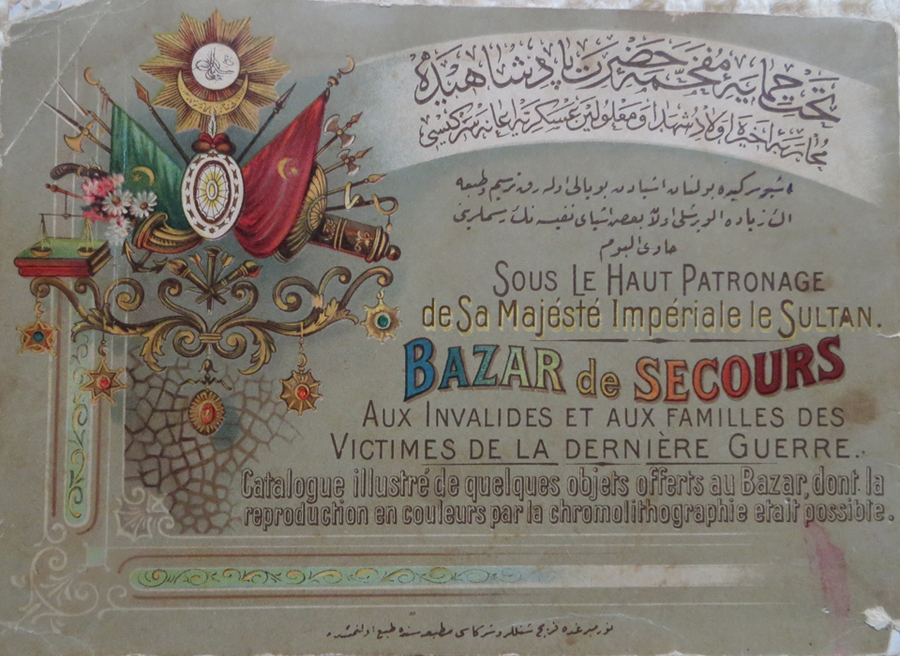
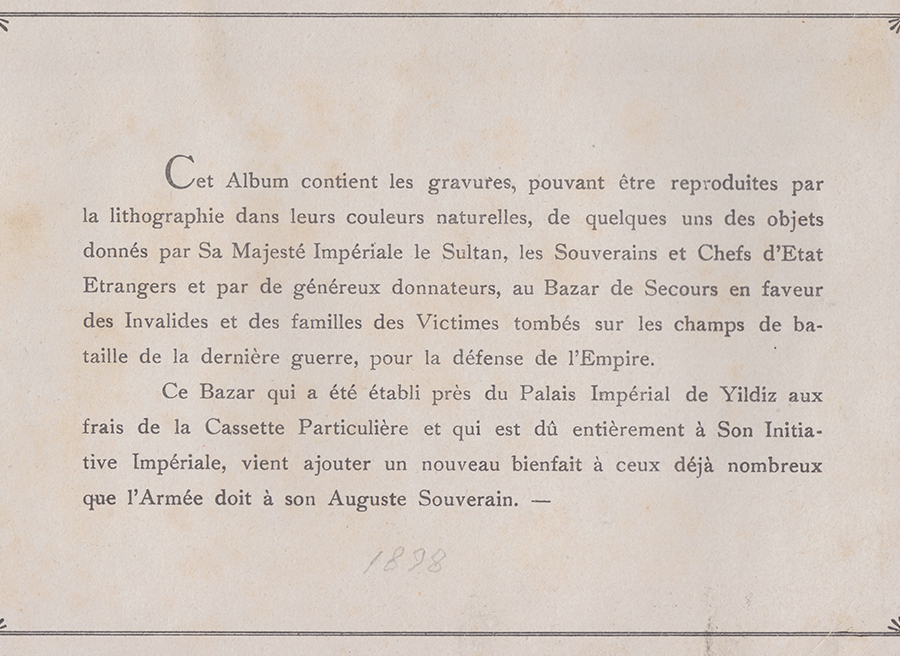
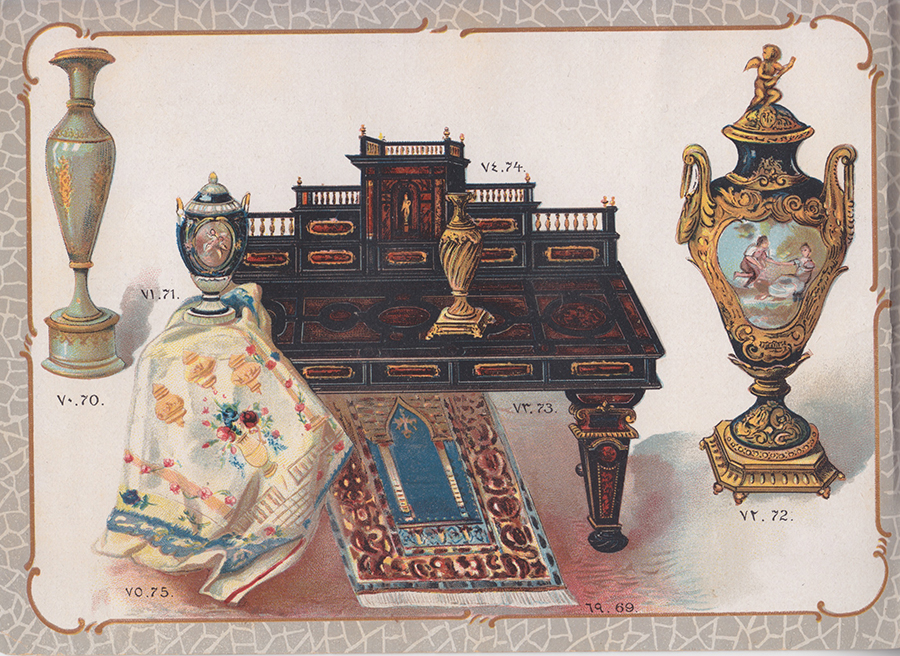
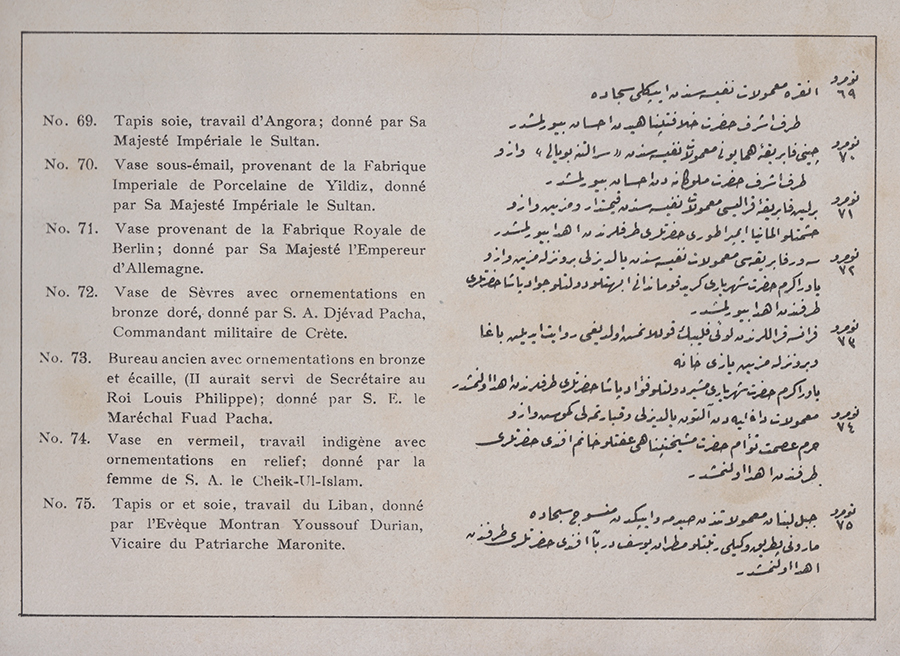
Sena Hatip Dinçyürek online presentation: ‘The British Relief Efforts for the Ottoman Refugees of 1877-78 Russo-Turkish War’, 7 March 2023 - flyer:
1- During the Crimean War (1853-56) Britain and France were fighting with the Ottomans yet during the Russia-Turkish War (1877-78) the Western powers were nominally neutral, yet the threat of the Russians reaching Constantinople was much greater. What had changed to account for this altered stance?
The Ottomans fought against the Russian Empire as a part of the Western Alliance (including Britain, France and Sardinia) in the Crimean War of 1853-56. Following the war, the Ottoman Empire was recognized as a legitimate member of the Concert of Europe with the Treaty of Paris which was signed to conclude the 1856 Congress of Paris. However, when the 1877-78 Russo Turkish War broke out, it became apparent that the twenty years since the Crimean War had seen major shift in diplomatic relations, especially between the British and Ottoman governments. That was due to two main reasons: Firstly, the domestic affairs of the Ottoman Empire, namely the upheavals of the Christian subjects in the Balkans and the suppression by the Ottoman forces drew significant European attention and led to a negative public opinion towards the Ottomans. Second, the developments in the British internal politics played a crucial role; the opposition, led by Gladstone, harshly criticized the Disraeli government for its pro-Ottoman stance, making it difficult for the conservatives to support the Ottoman government.
2- Sir Austen Henry Layard who was the Ambassador to the Ottoman Empire at the time of the Russia-Turkish War and was an intellectual giant who clearly understood the Ottoman mind-set and precarious situation. Do you think he was one of the main movers in helping highlight the situation of the numerous Muslim refugees and use his influence to push-back against the many reports of massacres of Christians in the Balkans by the irregular Ottoman forces to secure this ‘humanitarian diplomacy’? Was it a delicate balancing act as there was also a strong Gladstonian view of Ottomans as being responsible for these massacres?
I definitely think that A. Henry Layard was the architect of the humanitarian campaign for the Ottoman refugees of the 1877-78 War, and this campaign was an outcome of careful calculations. This is why I prefer to consider it an act of humanitarian diplomacy. Layard was trying to show support for the Ottoman government while maintaining a balance in British domestic politics, as Disraeli’s government was cornered by the opposition’s criticism led by Gladstone. Hence, in the face of the 1877-78 War and the Russian advance, Henry Layard was trying to reshape Anglo-Ottoman diplomacy.
3- Was the Ottoman army medical corps at the time rudimentary and do you know if the Ottomans employed foreign field surgeons in an attempt to fill this gap?
Even though the first School of Medicine in the Ottoman Empire, Mekteb-i Tıbbiye-i Şahane, was founded as early as 1827 and had been training doctors for the army ever since, the capacity of the medical corps in 1877 proved to be far from sufficient given the magnitude and rapid pace of the crisis at the time of the 1877-78 Russo Turkish War. The medical assistance offered by non-belligerent powers was welcomed by the Ottoman authorities, and it is known that a large number of foreign surgeons operated in the theatres of war. The Stafford House Committee, for instance, was the largest British organization with this purpose. It was established specifically to relieve the combatant Ottoman soldiers by the Duke of Sutherland. Together with the National Society for Aid to the Sick and Wounded in War (later to be known as the British Red Cross) these two organizations became the primary British mediums to provide medical relief to Ottoman soldiers. They established hospitals and ambulances, and provided the necessary medical staff.
4- Layard was clearly an efficient organiser of the Turkish Compassionate Fund and do we know the names of the committee who were on this organisation and did it extend beyond the British diplomatic missions in the area to bring in additional expertise?
The report book of ‘the Turkish Compassionate Fund’ (TCF) was published in 1883, soon after the completion of its operations (H. Mainwaring Dunstan, The Compassionate Fund: An Account for Its Origin, Working and Results, London: Remington and Co., 1883). It is the main source of information regarding the details of the organization both in London and Turkey. We have a list of the initial members of the TCF, published in The Daily Telegraph on August 14, 1877. Regarding those people active in the field distributing aid, apart from the British diplomatic corps, it is worth mentioning both Turkish and European volunteers. TCF cooperated with local authorities and consulted experts whenever necessary, especially to purchase necessary provisions and the relief material. They also collaborated with specialists for medical and sanitary matters (such as the surgeons working for the other relief committees). There is not an exclusive list of individuals involved; however, many names often appear in miscellaneous documents.
5- The Turkish Compassionate Fund also established hospitals in Istanbul that were mostly staffed by local British residents. Do we know if these hospitals later continued functioning once the refugee emergency was over?
Not to my knowledge…
6- You refer to the ‘Ladies Committee’ dealing with the ‘unplanned assistance’, consisting of wives of Ambassador / Pashas, wives of local British merchants etc. So was it set up before the Turkish Compassionate Fund and its remit shifted as the numbers of refugees grew and did they also get funds directly from the Baroness Angela Burdett-Coutts donation?
The ‘Ladies Committee’ was already in action under the leadership of Lady Layard, before the establishment of the Turkish Compassionate Fund. Their preliminary aim was to send relief items, such as bandages and beddings, to sick and wounded Ottoman soldiers. However, once the refugee influx turned out to be an even more dire humanitarian crisis and the funds for the civilians began to be received from London, the scope of their work shifted from military to civilian. Hence, Ladies Committee started to operate as a sub-committee of the Turkish Compassionate Fund, contributing to relief effort for the refugees, refraining from using the sources of the TCF for the combatants.
7- Do you have any evidence that the Ottoman government took lessons from the organisation of Turkish Compassionate Fund and associated foreign relief organisations and sought to create or strengthen their own similar agencies such as increasing the number of hospitals, trained medical staff etc.?
The Ottomans already had an ‘Emigrant Commission’ (Muhâcirin Komisyonu) which was established in 1860’s in order to cope with the refugee influx of the post Crimean War conjuncture. ‘The Ottoman Red Crescent Society’ (Hilal-i Ahmer Cemiyeti) was founded in 1868. The Emigrant Commission and the Red Crescent, together with many of other smaller Ottoman organizations, were active during the 1877-78 War, however their capacity and abilities were very limited compared to the volume of the refugee flow. I did not personally carry out, or came across with, a comparative research regarding the possible effects of the 1877-78 foreign relief experience on the Ottoman committees after the war. I can only speculate that such an influence would not be surprising. Yet, I believe the experience of the 1877-78 Refugee Crisis as a whole, must have had major impact on Ottoman understanding of management of humanitarian crises.
8- Have you had a chance to examine official or unofficial local British assistance to war time refugee conditions in other conflicts of the late Ottoman Empire such as the Balkan Wars?
Unfortunately, I have not yet had the opportunity to conduct exhaustive research on the British relief efforts in the Ottoman Empire after the 1877-78 Russo-Turkish War. However, I know that with the outbreak of the Balkan Wars in 1912, Lady Lowther, the wife of the British Ambassador to the Porte (1908-1913) Sir Gerard Lowther, was soon to become a renowned benefactress and founded a relief fund for the non-combatants. Its establishment was announced by the Times in October 1912 and carried out extensive relief work mainly in Istanbul. Also, the British Red Cross was heavily involved, sending doctors to Turkey to treat the sick and wounded soldiers and help combat the epidemics, particularly in the hospitals they established on the outskirts of Istanbul. British assistance was also provided in several occasions through the channels of the Ottoman Red Crescent Society. (see, A. Duncan Johnstone, With the British Red Cross in Turkey, London: James Nisbet & Co., 1913; Oya Dağlar Macar, Balkan Savaşları’nda Salgın Hastalıklar ve Sağlık Hizmetleri, İstanbul: Libra, 2009; Cemal Sezer Ömer Metin, Hilâl-i Ahmer Cemiyeti’nin Balkan Savaşlarında Muhacirlere Yardımları, Ankara: Türk Kızılayı Yayınları, 2016.)